
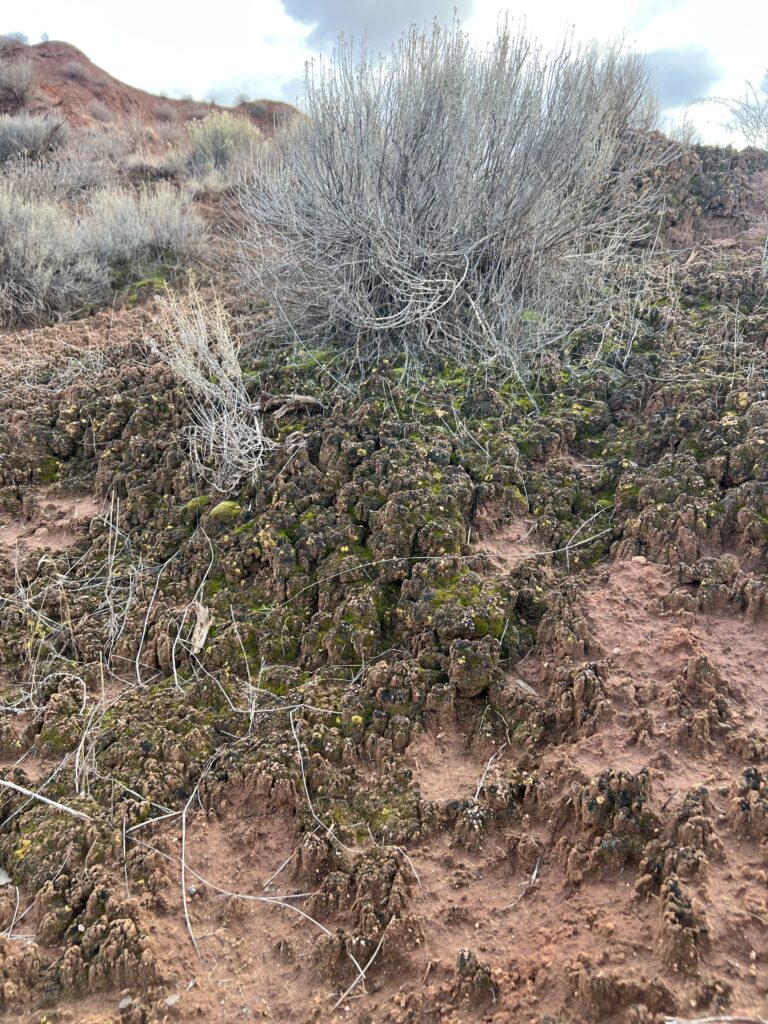
If you spend time exploring the desert around Page, AZ—whether on a UTV, dirt bike, ATV, mountain bike, or on foot—you’ve probably passed right by one of the most important living organisms in the entire landscape: cryptobiotic soil.
Around here, we like to remind guests to g because even a single footprint can take centuries to heal.
Cryptobiotic soil—also known as biological soil crust or crypto soil—is a living layer made of mosses, lichens, algae, fungi, and bacteria woven together to protect the desert floor. It looks like raised, knobby, dark patches of dirt, but it’s actually a living organism.
This soil crust is one of the desert’s greatest survival tools. It stabilizes the landscape, feeds the soil, and helps plants grow in one of the harshest environments in the world.
In the desert environments around Page, Antelope Canyon, and Horseshoe Bend, cryptobiotic soil is essential for keeping the ecosystem stable and alive.
It helps the environment by:
Without cryptobiotic soil, the landscape would be far more vulnerable to erosion, plant loss, and long-term degradation.
Although crypto soil is strong from an ecological standpoint, it is very delicate when stepped on or driven over. One misplaced foot, tire track, or shortcut can crush a patch that took decades or even centuries to form.
Once damaged:
This is why staying on designated trails is more than a courtesy—it’s a responsibility.
Northern Arizona has some of the most robust cryptobiotic soil communities in the Southwest. You’ll find them near:
If the ground looks dark, bumpy, fragile, or “alive,” you’re probably looking at crypto soil.
At Page Adventure Company, we’re committed to being stewards of the desert. We love adventure just as much as anyone, but not at the expense of the land we cherish.
Here’s how riders can help protect cryptobiotic soil:
This is the golden rule. Trails are chosen in areas where crust is less vulnerable. Cutting corners or creating new paths leads to lasting damage.
If it looks like raised, bumpy, or dark crust—it is. Keep your tires and boots off it.
This is our favorite reminder for guests on our tours:
“Tip-Toe Around the Crypto.”
When you stop for photos or explore a viewpoint, take an extra second to choose the safest surface. Stand on rock, sand washes, or established trails—not on the living crust. A few mindful steps help preserve the desert for everyone.
Tracks invite more tracks. Set a good example by staying within existing routes.
Most people don’t damage cryptobiotic soil intentionally—they just don’t know what it is. Share the knowledge.
Our guides know exactly where cryptobiotic soil lives and how to travel responsibly around it. On our UTV tours through Antelope Canyon, Horseshoe Bend, and the high desert around Page, we teach guests how to explore with care.
We’re riders, explorers, and lovers of the desert—just like the people who visit us. But we’re also neighbors to this land. Protecting cryptobiotic soil helps preserve the views, trails, wildlife, and landscape that make Page, AZ one of the most special places on Earth.
When you ride with us, you’ll get the adventure you’re looking for and the confidence that you’re traveling in a way that preserves the land for generations.
One of the best—and safest—ways to explore the stunning desert around Page, AZ is on a guided UTV tour with Page Adventure Company. Our routes travel through some of the most breathtaking backcountry near Horseshoe Bend, Antelope Canyon, and the Colorado River, while avoiding sensitive cryptobiotic soil zones.
When you ride with us, you get more than a thrilling off-road experience. Our guides teach you how to read the landscape, identify cryptobiotic soil in the wild, and choose the right surfaces to travel across. It’s all part of our commitment to protecting this fragile desert ecosystem while still providing unforgettable adventure.
Expect sweeping views, stretches of rolling slickrock, sandy washes, hidden overlooks, and plenty of stops to learn about the geology, wildlife, and natural history of the area. Whether you’re new to off-roading or a seasoned rider, our tours strike the perfect balance between excitement and environmental respect.
If you want to experience Page’s most iconic scenery the right way—responsibly, safely, and with local experts—join us on a tour.
👉 Learn more and book here: Page Adventure Company
It usually appears dark, crusty, bumpy, or brain-like on the ground.
Yes, but it takes decades—sometimes centuries—especially in cold desert environments like the Colorado Plateau.
No. Even one footprint can destroy years of growth. Always stand on rock or established trails instead.
It’s found near Horseshoe Bend, Antelope Canyon, Glen Canyon, and throughout the surrounding high desert.